In This Article
Is soy good or bad for you?
By now, we’ve all been sufficiently confused about the merits and dangers of soy.

Ancient writings from China suggest the soybean was traditionally considered unfit for human consumption until a soy fermentation technique was discovered. The reason may be that the soybean is uniquely endowed with certain toxic antinutrients that are particularly hard to digest. As a result, soy is being linked to a host of health concerns.1
On the other side of the aisle, there is evidence that soy can offer protection against many of the same concerns.2 So, who should we believe?
Join me as I delve into this heated debate in search of answers. I’ve done my best to include as much research as possible from both sides, before presenting an Ayurvedic perspective.
What is an antinutrient?

Many plants are protected by toxic antinutrients, which ward off insects and animals that might otherwise eat them. Beans, in particular, are famous for these antinutrients, which, as many of us may know from experience, can make them a challenge to digest.
Unlike most beans, antinutrients in soy don’t wash or cook off and, according to research by soy opponents, present significant health risks.
Antinutrients come in a variety of forms. Below I’ve listed the main components of soy that, according to many experts, are cause for concern.
Breaking it Down
Soy’s troubling compounds + soy supporters’ rebuttal

- The first troubling group of antinutrients is called phytates. Phytates bind to minerals like zinc, calcium, magnesium, iron, and copper, and may strip them from the body, resulting in mineral deficiencies. Along with enzyme inhibitors, phytates may block the absorption of nutrients from soy, so that any possible benefit is effectively negated.4 That said, soy protein has been used successfully in treating mild and moderate protein-energy malnutrition in some of the world’s sickest children, indicating that the nutrients in soy can be readily available and nutritious.5
- Goitrogens are substances that inhibit thyroid function. When the thyroid is compromised, it may enlarge in an attempt to absorb necessary missing nutrients, resulting in a mass called a goiter. Soy inhibits the thyroid’s uptake of iodine, thus driving up thyroid stimulating hormone (TSH) in an attempt to boost thyroid function. In 1991, Japanese researchers reported consumption of as little as 30 grams or 2 tablespoons of soybeans per day for only one month resulted in a significant increase in thyroid stimulating hormone 6—a sign of impaired thyroid function. The Japanese diet is also high in iodine which may naturally mitigate the potential negative effects of a high soy (goitrogen) diet. Soy supporters argue that in individuals with an otherwise healthy thyroid, no significant changes have been recorded.13
- Genestein and diadzen, the isoflavone molecules in soy, inhibit an enzyme involved in thyroid hormone synthesis and may suppress thyroid function as well.7 These isoflavones have also been reported to disturb liver function, reproductive hormones, and fertility.8-12 Experts recommending soy acknowledge this, but argue that in otherwise healthy individuals, studies show soy products have no negative effects on thyroid function.13
- In vitro studies suggest isoflavones inhibit synthesis of estradiol and other steroid hormones.14-15 Soy supporters say genistein is actually estrogenic in a positive way. According to this theory, it interacts directly with the notorious HER2 cancer-causing gene, inhibiting its activation by cellular machinery and thereby preventing cancer promotion.16
Today, soy manufacturers are acutely aware of the antinutrient issue and claim they are removed during processing.3 The only risk, according to them, is when one eats raw soy beans, which many say to avoid.
Fermentation: The Ancient Solution
In China, the discovery that soy could be cultured or fermented brought with it a shift in soy’s reputation. While unfermented soy was still avoided as a food, the fermentation process appeared to free soy from the toxic antinutrients and, moreover, actually released some amazing health benefits. During the Ming Dynasty, the fermented soy food natto actually found its way into Chinese Medicine’s Materia Medica, as a nutritional remedy for many health conditions.

Today, many experts believe that fermentation is the only way to neutralize the dangerous antinutrients in soy. Perhaps soy may be best classified as a medicine (in its fermented state), rather than a food.
The Ayurvedic Perspective
According to Ayurveda, soy is a very hard protein to digest and is not a traditional part of the Ayurvedic diet. In fact, some Ayurvedic doctors are strongly against soy and do not consider it a digestible food. Perhaps the knowledge of its antinutrient content spawned caution in India as well.

Energetically, it is considered heavy and dulling for the mind. It is generally believed that soy acts more like a nut than a bean, and is therefore pacifying for vata. Still, because of its difficulty to digest and somewhat rajasic or stimulating nature, soy was rarely used medicinally.
Interestingly, fermented foods are also not favored in Ayurveda, and fermented soy products were never part of the Ayurvedic diet. According to Ayurveda, fermented foods may aggravate vata and are considered tamasic, or dulling for the mind. As a result, fermented foods were not used in Ayurveda and the medicinal nature of fermented soy foods such as natto was unknown.
In summary, soy is generally avoided in Ayurveda, while some Ayurvedic experts allow it in moderation. Soy should not be your main source of protein.
Soy in the West

In the West, soy products have become an industry. From soy milk to soy pills and soybean oil in just about every processed food, Americans are getting way too much soy. Even the promoters of soy encourage moderation and advise that soy not be the major source of protein in one’s diet.
It can also be very difficult to get non-GMO soy in the west, which may in itself be enough of a reason to avoid it.
Natto: Ancient Chinese Medicine, Applied
As I’ve mentioned, traditionally fermented soy foods like miso, traditionally brewed soy sauce, tempeh, and natto are proven safe on both sides of the aisle, and have documented beneficial health properties. Natto, in particular, has been documented and safely used for cardiovascular and circulatory support in the West for the past 20 years.

Natto is extremely high in vitamin K2 and fibrinolytic enzymes called nattokinase that has been found to address plaque formation in the heart.
A fibrinolytic enzyme is an enzyme which prevents the body’s natural process of clot formation. Blood clots, or thrombi, can block blood flow in the arteries of the heart and brain and cause angina, heart attack, or stroke. Protective fibrinolytic enzymes are produced by the body but, as we age, production of these enzymes declines.
It has been determined that nattokinase actually has four times greater fibrinolytic activity than plasmin, the body’s own endogenous fibrinolytic enzyme.17
We recommend "97% of Americans are Low in Vitamin K2": https://lifespa.com/k2-deficiency/
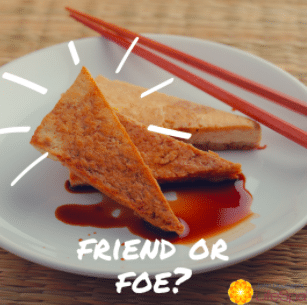
Conclusion: Is Soy Friend or Foe?
Now that we’ve taken a look at the research from both sides, glanced at soy’s history, and taken into consideration the perspectives of two ancient systems of medicine, what’s the verdict? Here’s my take:

- Soy should not be your main source of protein. Avoid soy pills. Avoid or reduce soy milk, soy cheese, and other processed soy foods.
- A note on tofu: in Japan, tofu is significantly more cultured with a much stronger taste than it is here in the States. American tofu should be eaten in moderation.
- Enjoy traditionally fermented soy products such as miso, tempeh, natto, and traditionally brewed soy sauce. Still, make sure even these products are organic and non-GMO: this very important!
- Consider including natto either as a food in your diet, or the enzyme nattokinase as a supplement, to maintain optimal health of your arteries.
What do you think about soy?