In This Article
Healthy Muscle Mass Means Healthy Aging
Have you ever considered the role that muscle mass plays in aging? Age-related loss of muscle mass has been directly linked to a shortened lifespan, blood sugar issues, frailty, morbidity (sickness), and much more. After the age of 30, we start losing 3 to 8% of our muscle mass per decade. After 60, this number is significantly higher.
This involuntary loss of muscle mass as we age is called sarcopenia. Perhaps most concerning is the frailty that comes along with age-related muscle loss. Frailty increases the risk of falling, and falling injuries result in broken bones, joint replacements, time in hospitals and rehab centers—all of which increases the chances of further illness.
Current research reflects this, too. A meta-analysis of 16 studies evaluated over 81,000 volunteers who had low skeletal muscle. The results showed that low skeletal muscle was significantly associated with an increased risk of all-cause mortality and a shorter lifespan.
What is the Cause of Muscle Mass Loss?
The consensus when it comes to the cause of age-related muscle loss is that it is a multifactorial problem with underlying age-related issues. While aging does cause predictable changes in the human body, research suggests that many of these changes are preventable.
Some of the age-related issues are linked to a decline in protein synthesis. This is why you should increase the amount of protein you consume as you age.
There are also age-related reductions in hormonal function that have been linked to a loss of muscle mass. Aging is also linked to mitochondrial DNA damage from oxidative stress, which affects the body’s ability to provide the muscles with the necessary energy to stay strong.
See also Methylation-Balancing Foods to Support Healthy Aging
Finally, and perhaps most importantly, is that as we age, we tend to become more sedentary. While building muscle is quite complex, in the simplest terms it is clear that we need to use our muscles to build them up, stay strong, and ward off frailty. The best way to do that is with resistance weight training. We must also feed the muscles with adequate amounts of protein.
Is a Low Protein Diet Healthier?
We have been told that a lower to moderate protein diet is beneficial and offers protection against heart disease, metabolic concerns, and healthspan issues. Some research suggests a low-protein diet to protect against cancers. In one study, an animal protein diet was swapped out for a plant-based protein diet. This study concluded that a plant-based protein diet was associated with a lower risk of all-cause mortality, heart disease, and dementia.
So, many health-conscious folks end up restricting red meat and aiming to get more of their nutrients from plant sources. Plant protein like nuts, grains, seeds, and perhaps eggs and poultry have research behind them to suggest a lower protein diet (in comparison to high amounts of red meat) may have provided these people a certain level of protection from accelerated aging and age-related disease.
Studies also have shown that as we age, our metabolism changes along with our nutritional requirements. This is particularly true for our need for more protein as we age. Studies show that as we age, a greater intake of protein can improve muscle health, prevent frailty, aid cardiovascular function, and help maintain energy balance. Energy balance is the balance between how many nutrients you ingest compared to how many calories you burn in a day. Increased protein intake has also been linked to prevention of chronic diseases and increased quality of life in healthy elderly adults.
So, the research seems to suggest that while a lower to moderate intake of protein during middle age may offer numerous health benefits, increasing the amount of protein we eat as we age will not undermine these benefits but rather continue to build into something even better
Perhaps the main mechanism for why a higher protein diet is beneficial as you age is to ward off frailty. In addition to the benefits already mentioned, muscle is a robust storage place for blood sugar. Studies show that the greater your muscle mass, the lower your risk of developing type 2 diabetes. If we allow ourselves to lose muscle mass as we age, we also lose the ability to store and sequester blood sugar. If you were an athlete in the early part of your life and developed greater muscle mass and strength, your body created a metabolism that may still be depending on that muscle mass for balancing your blood sugar and your metabolism. If, as you age, you lost that bulk, your body may still be metabolically functioning as if that muscle mass was there. This age-related change in our ability to sequester blood sugar could be an underlying cause of stubborn high blood sugar levels. I personally found this to be true and now am working on building back the muscle mass in my legs that I had as a college tennis player and triathlete.
See also Do You Need More Protein as Your Age?
The Best Protein to Build Muscle Mass
In a 2023 study, thirty-two people were given either a whey protein supplement or a placebo. They all performed resistance weight training for 60 minutes per day, six days a week, for four weeks. The results showed that the group who had whey protein supplementation saw an increase in muscle mass and overall muscular strength and endurance compared to the placebo. Study after study has found that whey protein is the most effective for building muscle mass. For the elderly who may have trouble building muscle mass, whey protein significantly increased handgrip strength and skeletal muscle mass in older people with reduced muscle mass or sarcopenia.
How Much Protein Do I Need?
According to Stanford University, folks over 50 need .54 to .72 grams of protein per pound of body weight. For a 165-pound person, this would be 90-120 grams of protein a day. Some experts are suggesting even as much as 1 gram of protein for each pound of body weight. It’s best to aim to consume a protein-rich meal at least 2 hours after a resistance training workout to build muscle mass and strength.
According to the research, it doesn’t matter whether the protein is from animal or plant sources, but it is difficult to consume this much plant protein as it is not as dense a protein source as animal protein. This does make having a clean protein powder a helpful tool to maintain healthy protein levels as you age.
Learn More About
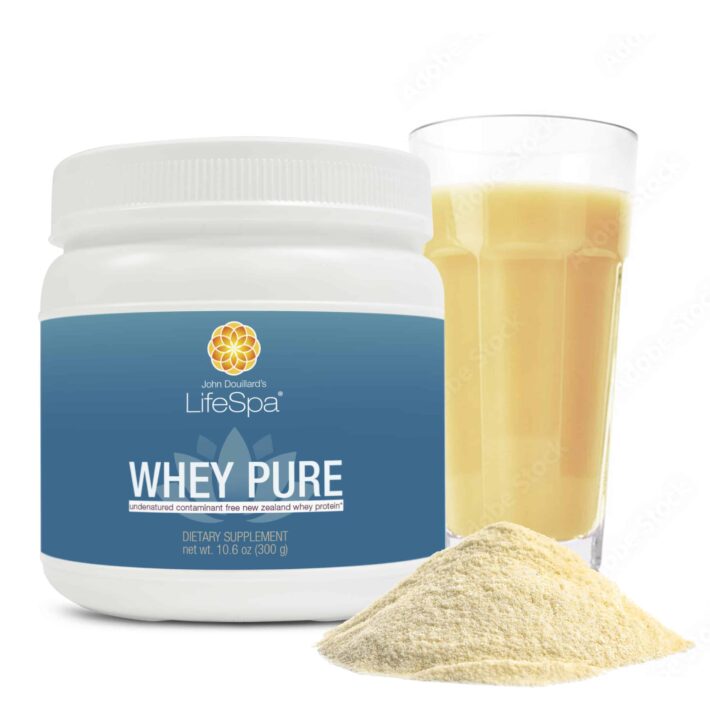
Whey Pure:
LifeSpa’s Undenatured, Unadulterated, Contaminant-Free, Whey Protein Powder Sourced from New Zealand Cows